The Kruger Houses
THE KRUGER HOUSES AT BOEKENHOUTFONTEIN
Five Blue Plaque sites at Boekenhoutfontein (Paul Kruger Country House Museum):
-
-
-
-
-
-
-
-
-
-
-
-
-
-
-
-
-
-
-
-
-
-
- Bronkhorst House
- First Kruger House
- Second (Main) Kruger House
- Pieter Kruger House
- Old School Room
-
-
-
-
-
-
-
-
-
-
-
-
-
-
-
-
-
-
-
-
-
The five historical buildings were built adjacent to one another over a period of about 50 years in the late 19th Century. Today they have been beautifully restored and equipped with authentic furniture and artifacts from the time of their occupation. Collectively known as the Paul Kruger Country House Museum, they are owned and curated by the Recreation Africa Group and are accessible to the public. The five historic buildings have each been awarded blue plaques.
The farm Boekenhoutfontein was bought by Paul Kruger in 1862 and he and his family lived there from 1873. After his death in 1904 the farm was divided between his two sons, Pieter and Jan, and his son-in-law Theunus Eloff; Pieter bought out his siblings’ shares in the early 20th Century. After his death portions of the farm were sold off in subsequent years and the buildings were extensively altered and finally abandoned and allowed to fall into disrepair.
In 1971 the Simon van der Stel Foundation restored them to their original state and opened to the public as a museum and restaurant in 1983. A decade later ownership of the historical farm passed to Recreation Africa Group, a private organisation with a strong commitment to the acquisition and preservation of southern African heritage. Kedar Heritage Lodge was built a short distance from the Kruger houses on the same farm and holds one of the most extensive collection of South African War artifacts and sculptures in private hands.
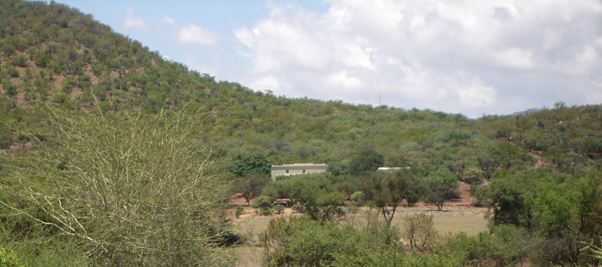
The Kruger Houses

Further Reading on the Kruger Houses:
Bergh, J.S., ‘Kruger and landownership in the Transvaal’, Historia 59(2), 2014: 69-78.
– A comprehensive analysis of Paul Kruger’s acquisition of land in the Transvaal.
Labuschagne, Elize, Boekenhoutfontein. Simon van der Stel Foundation, 1983
– An informative pamphlet published for visitors to Boekenhoutfontein after the restoration of the buildings.
Kruger, S.P.J., The Memoirs of Paul Kruger. Toronto: George A Morang & Co., 1902.
– Dictated by the author to H.C. Bredell and Piet Grobler, translated from Dutch into German by Rev. Dr. A Schowater and translated into English by A. Trixeira de Mattos.
Mbenga, B. and Manson, A., ‘People of the Dew’: A history of the Bafokeng of Phokeng-Rustenburg Region, South Africa, from early times to 2000. Johannesburg: Jacana, 2010.
– A detailed description of the relations between Paul Kruger and the Bafokeng.
Meintjes, J., President Paul Kruger. London: Cassell, 1974.
Morton, F., When Rustling became an Art: Pilane’s Kgatla and the Transvaal Frontier 1820-1902. Cape Town: David Philip, 2009.
– A detailed description of the relationship between Paul Kruger and the Bakgatla.